Metropolitan Cathedral
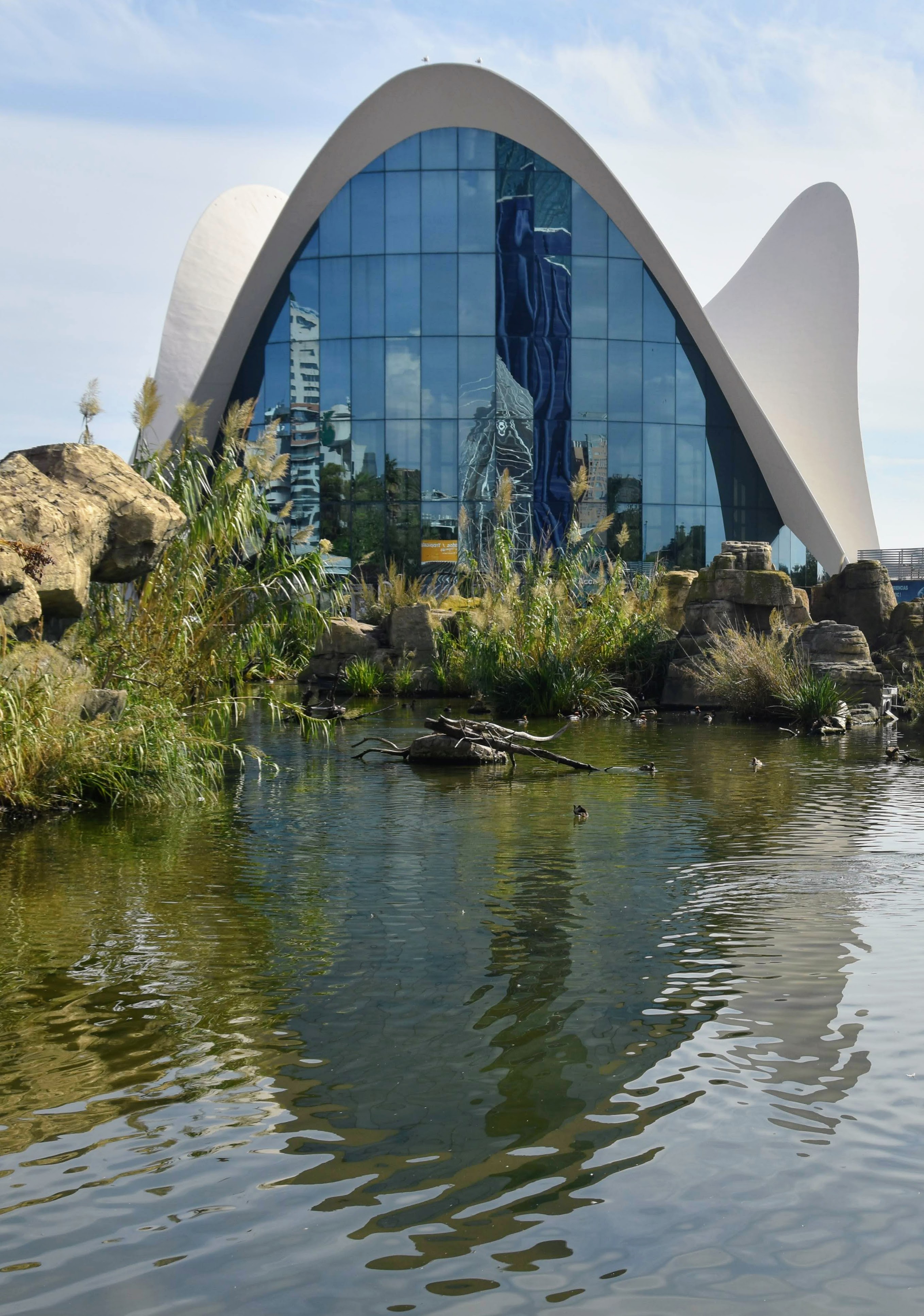
It was still lightly raining in the morning when we started our walking tour. Our first stop was the València Cathedral – the Metropolitan Cathedral-Basilica of the Assumption of Our Lady of València – where we ascended the 207 steps to the top of the Miguelete bell tower. Once out on the roof, we had views across the fairly flat city, to the hills on one side and the modern aquarium complex (more on that, tomorrow) and port on another. And we got up close and personal with the giant bell, which would have been deafening had it been rung.
Nothing like a climbing workout to start your day! Funny how you can be energized and yet have wobbly legs at the same time.
Plaça de la Reina
The cathedral and bell tower entry is in the Plaza de la Reina. If you are looking at Google Street View, note that the plaza is different from the 2019 images (in use as of this writing), but you can use the satellite view. I got confused when I was trying to identify and locate the statue of Guastavino, an engineer born in València in 1842 who patented a method of vaulting and designed many buildings in New York, Boston, Baltimore, Washington, D.C., and apparently even at the Biltmore in North Carolina. His statue was installed when the plaza was redesigned in 2022.

Guastavino, the "Architect of New York".
Cripta Arqueològica de la Presó de Sant Vicent
We crossed in front of the cathedral and passed along its east side. We were headed to the Almudín, but we noticed this innocuous looking building that was not in our plan: the Archaeological Crypt of the Prison of St. Vicent the Martyr. We debated whether or not to go in, but I checked the price and it was €2 each, so why not? We went in to this small, underground space and had a look around at some Arab pottery, an old church foundation, and some other exhibits. It was cool but not overwhelming. Don't stop reading yet though —
When we came in I had seen mention of a video so I went back upstairs to ask about it. The lady said to go back down, to the end of the left side, and she would start the video in a couple minutes. And here is where it got really good.
The video is actually a multi-media presentation that moves you about the space to cover the history of the archeology findings, from Roman (including the imprisonment and martyrdom of St. Vincent), to Visigoth to Muslim periods. It described how parts of the structures were remade and used by subsequent ruling cultures, and just overall it had a unique feel to the whole thing. Certainly an underrated gem in València.
Tribunal de les Aigües de València
By now we were getting hungry so we doubled back a bit, along the cathedral rear wall to the Plaza de la Verge. Here, at the cathedral's Gothic Door of the Apostles, the València water court meets every Thursday at noon. Dating from 10th century Islamic rule, the court comprises representatives of each of the 9 agricultural water districts who meet to arbitrate disagreements among farmers. The meetings are public and conducted in Valencian (language).

The water tribunal meets in front of these doors.
We grabbed some lunch at the Cafetería la Virgen. I couldn't find a menu online to remind me of what we ate, but I seem to remember having a very good tuna salad and maybe my husband had some sort of pasta. When looking for a link to the restaurant I saw some pretty bad reviews, but I felt like the service and the food were fine, maybe a little slow.
It was a bit chilly and breezy but we sat outside and watched the goings-on in the plaza. I watched a woman with a malformed leg make her way to the center of the plaza. She seemed to make a bit of a show of wrapping her small, crippled foot. Then she began crawling along, scooching on her leg, and rattling a cup of coins. She was even going between the outside tables of the cafe farther down the plaza. It was sad but also really pushy and rude at the same time (please forgive me, I have complicated feelings about this sort of thing). Later, we saw her pass us speeding along in her electric wheelchair.
I would say that along this whole trip, we had seen a few beggars, most attempting some form of busking but some just outright begging. I feel like there were more here in València than other places.
Almudín de València
We resumed our tour, walking the short distance to the Plaça de Sant Lluís Bertran and the Almudín, which had served as a city storage, sales, and distribution center for wheat dating from the 14th century. Today, the open interior space is dedicated to the arts. When we visited, there was a photography exhibit with sections featuring artistic, historical, ethnic, amateur, and international works. Admission was free.
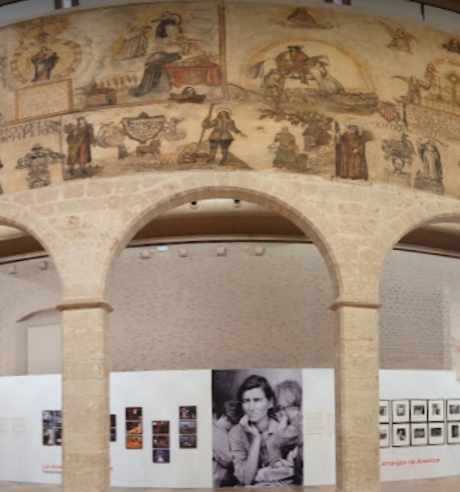
Photo exhibit in the Almudín. Click here for a photosphere to see the whole space.
Travel Tip
It pays to do some reading on the arts. Included in the exhibit at the Almudín were photos of the well-known US Depression-era photographer, Dorothea Lange. Because I had just read a magazine article about her, I felt clued in about aspects of the images to pay attention to and appreciate. This was just lucky; I had no idea I would see this display. But for some museums, you might be able to learn about their collections in advance.
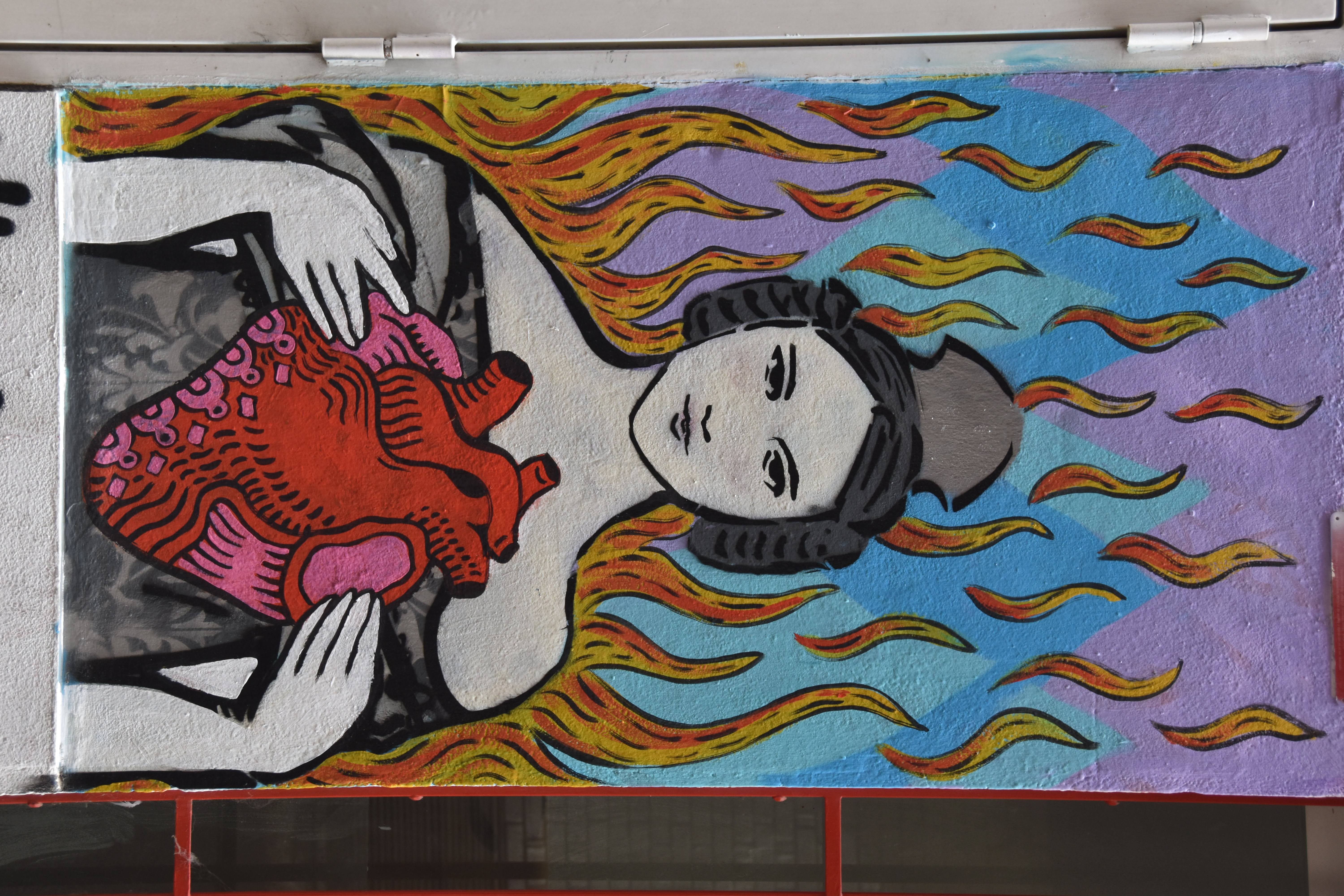
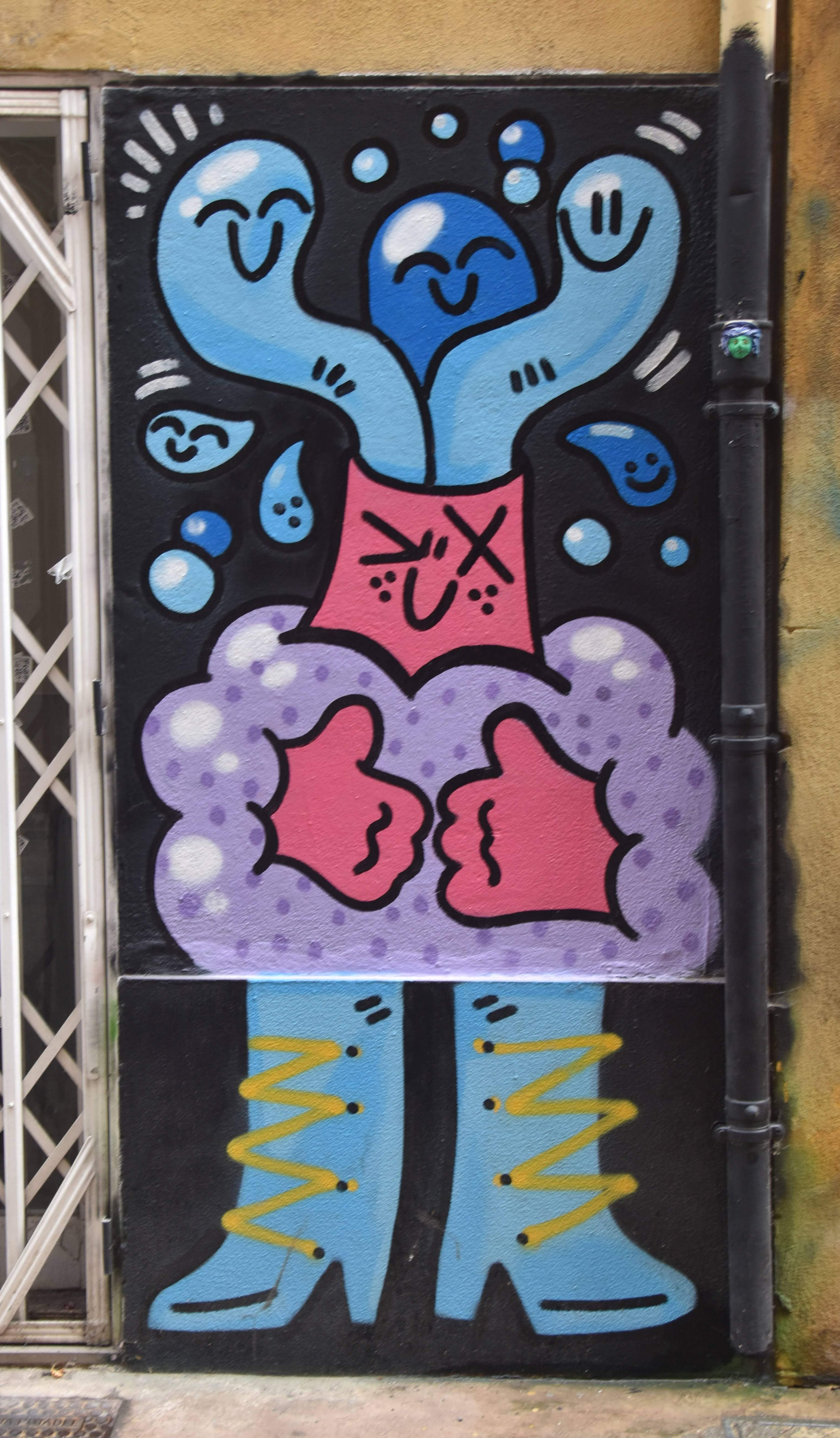
We made the long-ish walk from the Almudín toward the Central Market, passing lots of street art and some tags and posters protesting tourism (Antes todo esto era barrio is a bit of a slogan and not just a one-off item). A Google search told me that in Spain, both València and Barcelona are noted for their street art.
Plaça Redonda
On our way we passed the Church of Santa Caterina, then cut through the Plaza Redonda, or "round square". This small plaza is enclosed by shops and forms a small outdoor market around a fountain. This is a great place to shop for ceramics and textiles, including lace. I didn't pause at the time, but I wish I had stopped and browsed there for a bit.
Travel Tip
For each place that you will stay, try to find out what they are known for and plan to do a little shopping for it while you are there. You might find unique items and good values for textiles, shoes, leather, pottery, and more.
Mercat Central de València
We passed many shops in this commercial district, on the way to the Mercat Central de València. The market square dates to the 14th century or earlier. A gothic market hall was built in the late 15th century.
The current, enormous market was constructed in the early 1900s to provide all manner of foods and supplies to the growing city; it remains more functional market than tourist attraction. If you are not cooking during your visit, you might still plan for a lunch from the ready provisions available.
La Lonja de la Seda de València
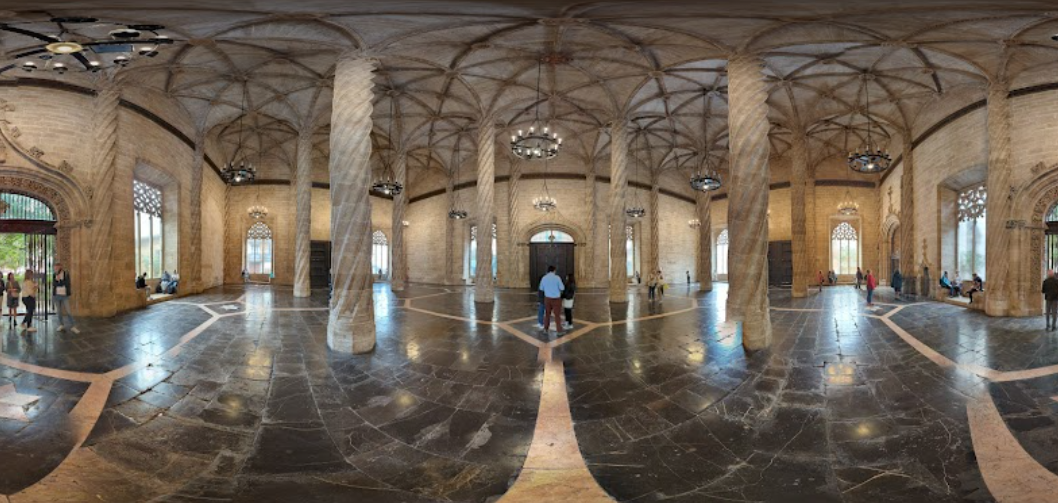
Adjacent to the market in Plaça de la Companyia is La Lonja de la Seda de València — the silk exchange where trading contracts were negotiated from the 15th century on. Sounds boring, but the World Heritage site is more like a palace, built in the golden age of Valèncian trade.
There is amazing carved stone throughout, including intricate panels around windows and doors. If you look closely you will see many figures, some making political or satirical statements. The main trading room is expansive under a vaulted room supported on spiraling columns. There are multiple spaces including a garden and a chapel, with a reminder to be honest in your dealings.
Today, in addition to offering tours of its beautiful architecture and wood, stone, and glass works, it is used for events and weddings. At least, I recall hearing this while we were there but I find it odd that I couldn't find a website about it.
Quart Towers
From the Lonja we continued down the street to the old city wall, meeting it at the Quart towers. The stairs to the top of the wall was closed due to rain, but our legs would have objected anyway, after the morning climb and hours walking.
San Nicolás de Bari y San Pedro Mártir
On this trip, we have passed by many cathedrals and other venues, stopping in at relatively few of them, for time and financial reasons. But I have to recommend this next cathedral, Church of San Nicolas.
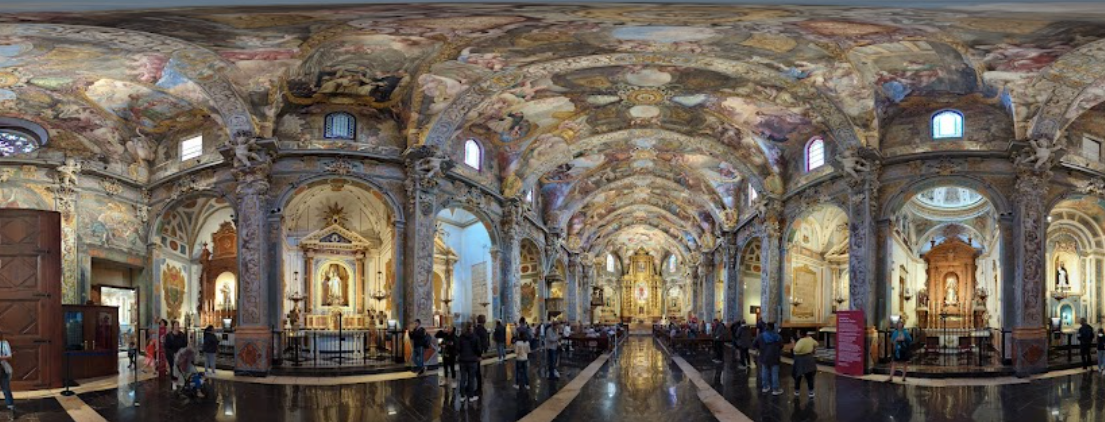
A sphere photo of the Church of San Nicolas. Click here to see it in a sphere viewer and move around in the space.
It was built in 1242 and remodeled in the mid-1400s, and has even been added to in the 19th century, so it presents a variety of styles. If you go, the audio tour is a must. It will lead you around from vault to vault and point out elements that are important in terms of religion, art, history, and even politics. There is so much to see jammed into a fairly small space, but even with the crowd it was pleasant and you could see everything. The complexity, color, and meaning is stunning.
Observation
If you want to adopt this itinerary, there is a more efficient order you could take. In fact, we had it laid out better in our travel plan, but then we didn't follow it exactly.
More walking, this time with food!
You would think with all these steps that we would like a nice, relaxing sit-down for dinner. Wrong! We signed up for a food tour! Now here is another time I wish I had taken notes, because I can't remember where we went or what all we ate. There were 10 people in the congenial group, including a Dutch couple and a Dutch mother and daughter who turned out to live within a half-hour of each other, and a group of college friends from Arkansas.

Mercat de Colom at night.
The tour covered 4 places, I believe, and I initially thought that was not a very good deal for the price. But then we had 3–4 dishes at each one so it ended up being a lot of food. Some of the foods I know we had included:
- hams and cheeses
- tomato bread (look ahead to our return to Barcelona where we will make this in a cooking class)
- fried padrón peppers, one of my favorites
- patatas bravas, better than you get in the touristy cafes
- tortilla, which in Spain is not a bread or chip, but a fluffy egg dish stuffed with potatoes
- a sampling of sausages including blood sausage, which I did not care for due to the texture more than the taste
- baked rice
- migas — by my own cooking vocabulary, this would be like a poached egg with gremolata
- raw oysters, which were great
- desserts, including Valèncian oranges, flan, and chocolate cake
- a variety of drinks including vermut, local beers, and orange and other wines (orange wine is not from oranges, but is a wine made by processing a white wine grape using skin contact in the style of a red wine)
It might have been a little pricey when compared to the Michelin restaurants we have been visiting, but overall a thoroughly enjoyable experience with a fun guide and group of people. The tour ended outside the Mercat de Colom so most of us decided to head inside and grab a drink. I think the college friends were looking for more nightlife after that, but we called it a day.