This next part of our itinerary covers only one day, but it was so awesome that it gets its own page. If you go to Portugal, and you are in any way a foodie, you absolutely should pay attention to this!
In the morning we got ourselves up and out, heading into the Alentejo, a geographical and cultural region to the south of Lisbon and stretching east to the Spanish border. Best known for producing cork, it has become one of the biggest wine regions and features grapes beyond Portugal's signature touriga nacional and tempranillo (known locally as Aragonez), such as Alicante Bouschet and the more internationally known cabernet sauvignon. It comprises several districts and cities, with 8 wine appellation sub-regions.
The day was fairly blustery as we started on our couple-hours drive to our first sight-seeing stop, Évora. Like many old towns, Évora is built on a hill topped by a monastery and cathedral. The town is small, so we parked and walked around.
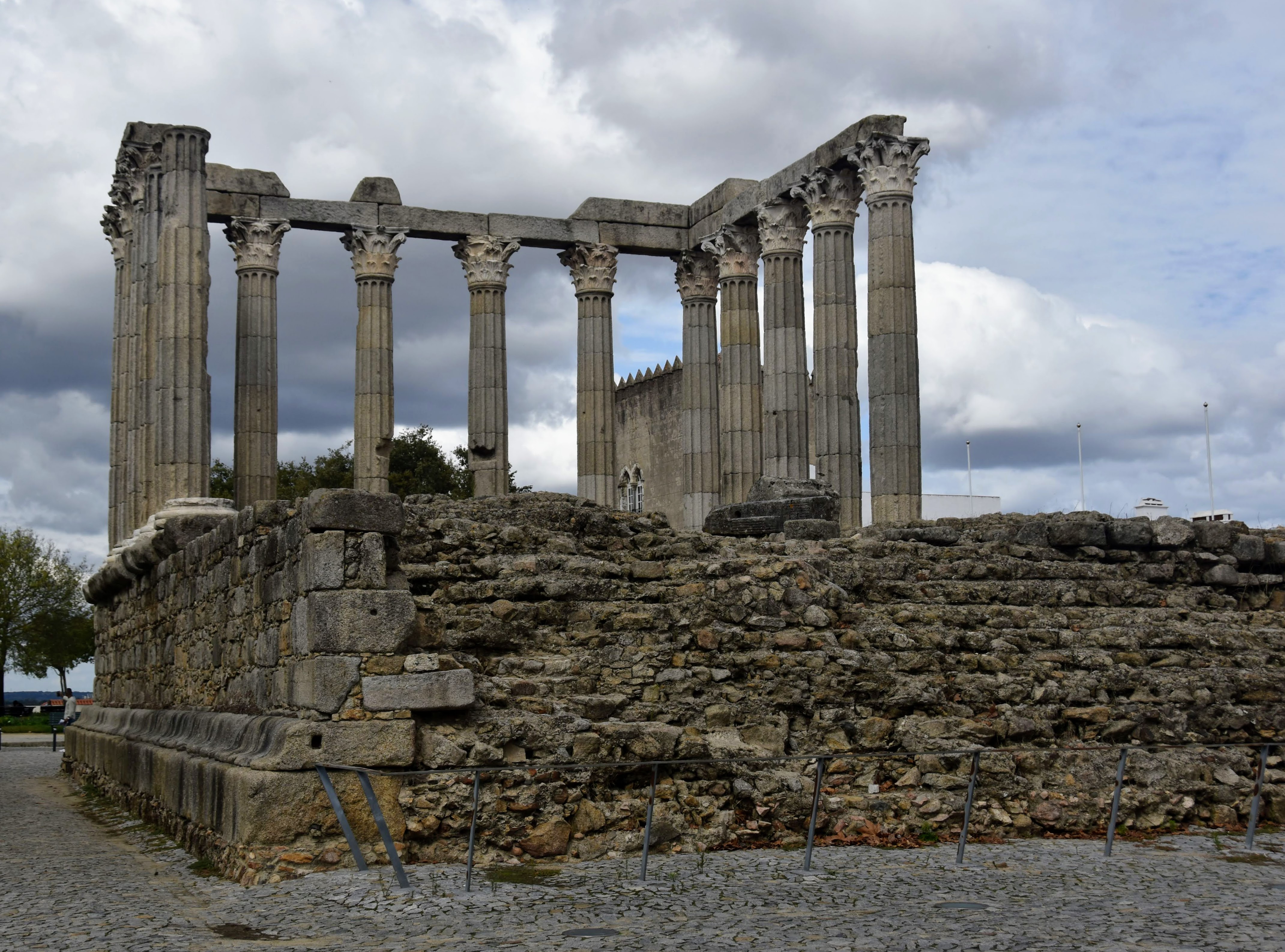
Roman Temple of Évora
First we came upon the Évora Roman temple. Even though it's in ruins, many columns stand and it is wild to think that it was in use over 2000 years ago. It is known as the Diana Temple due to a rumor started in the 17th century; in reality it was dedicated to the emperor-deity Augustus.

Évora Cathedral
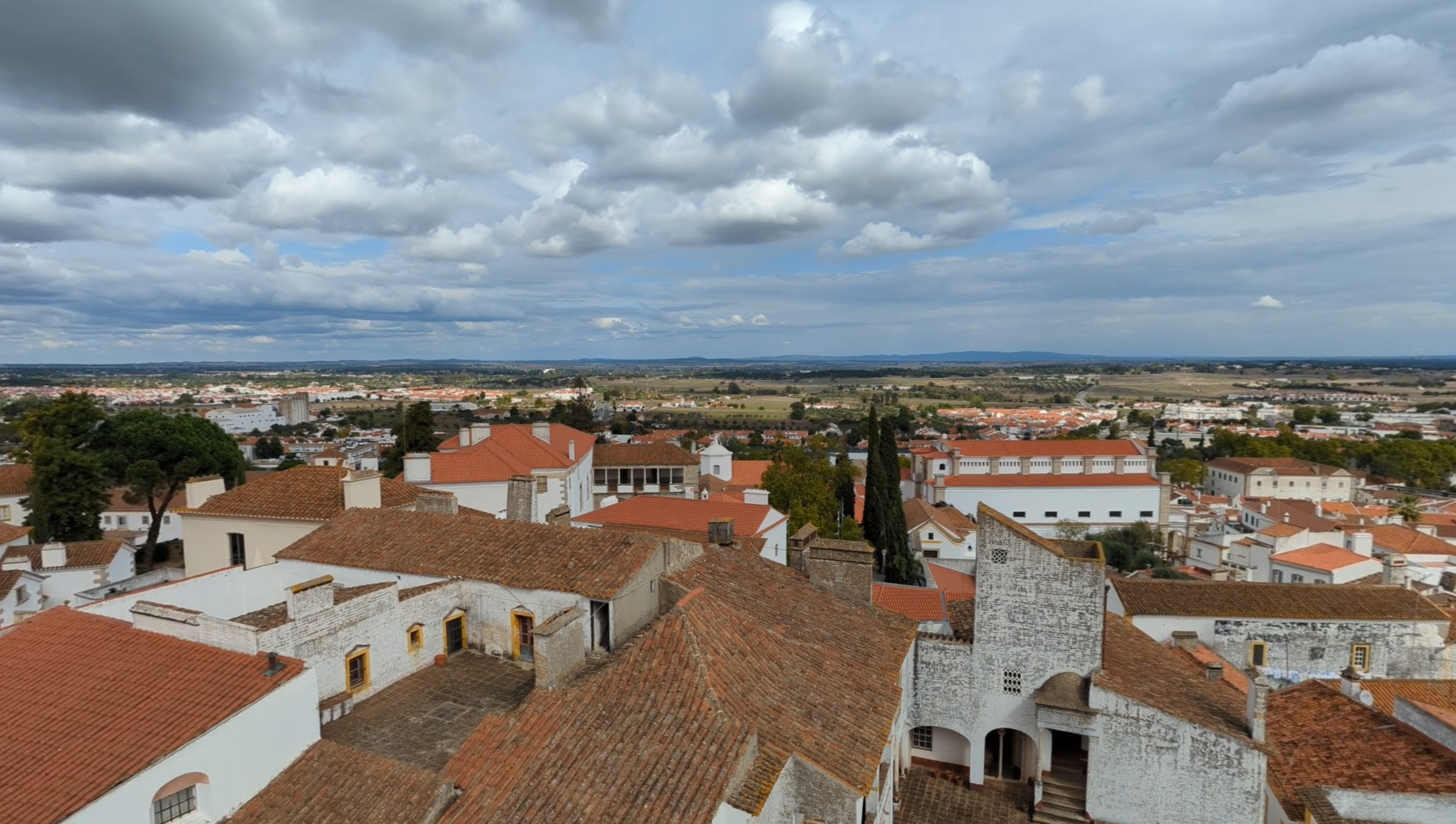
Next, Évora Cathedral. A fortress-church dating from the 12th century and expanded over time, it contains chapels and cloisters in Romanesque, Gothic, Renaissance, and Baroque styling. You can wander the chapels and halls and even climb the spiral staircase to the rooftop. The cathedral is on the highest point of the town so you have a great view of the area.
We were only passing through so did not make deep research into sights in Évora, but in looking up links for this page, I see that there is really a lot more happening in this region and I would be interested to come back here for a longer stay.


Pressing onward, we arrived at our lodging in Estremoz, the Casa do Gadanha. The inn is a remodeled house with 12 guestrooms and a cozy study at the top of a spiral stair. It is bright and clean and has a luxurious but un-stuffy feel. The hosts were friendly and very helpful. They had arranged a wine tasting for us. It was near the end of the day so they checked us in quickly and sent us on our way. We were only here for this one night, but the hotel has cozy shared spaces inside and out and I would like to have stayed longer.

You have to wait to pass the single-lane tunnel through the city wall.
Tiago Cabaço Winery
Our tour and tasting was at the winery of Tiago Cabaço, who grew up in a local wine making family then branched off with his own label and updated take on styling and marketing wines — for example, he offers wines named "blog" and ".com". The results are delicious! The winery is in a sleek new building. The tour was the first one that has ever shown us the bottling equipment, so we pretty much got to see the whole operation, except the actual crush which was already completed.
You can ship a case of wine to the US for about €110, so, about $10 additional per bottle. You might also have to pay duty or local taxes on it when you pick it up. We decided not to do this, but we are having trouble finding Portuguese wines so we might find a place to order online where we can get a mixed case from different wineries and regions.
We asked our wine hostess what we should do in Estremoz and she said something like, well, there's our castle. I love how she said "our". The fact is that Portugal — and probably much of Europe — is dotted with smaller cities on hills centered on ancient castles and cathedrals. So, of course after we parked back at the inn we set out on foot to see it. The streets were steep but the castle was encircled by a less steep, winding road up and around the hill, so we walked all the way around it.
Castelo de Estremoz
Inside the old castle walls is the old town, the castle and chapel, and a museum. It was later in the day so we did not go inside any buildings. We took in the sunshine and views then walked back down via the more direct stairs. We wandered in the town a bit before heading back for our dinner reservation.


Pelourinho de Estremoz
Down the hill in the old town center is Santo André Square, in the center of which is the Pelourinho de Estremoz. Pelourinho means pillory, so apparently this was the public punishment square near the castle, above on the hilltop. As we were standing here, a funeral procession passed on foot. We solemnly watched this old rite performed by modern lives.
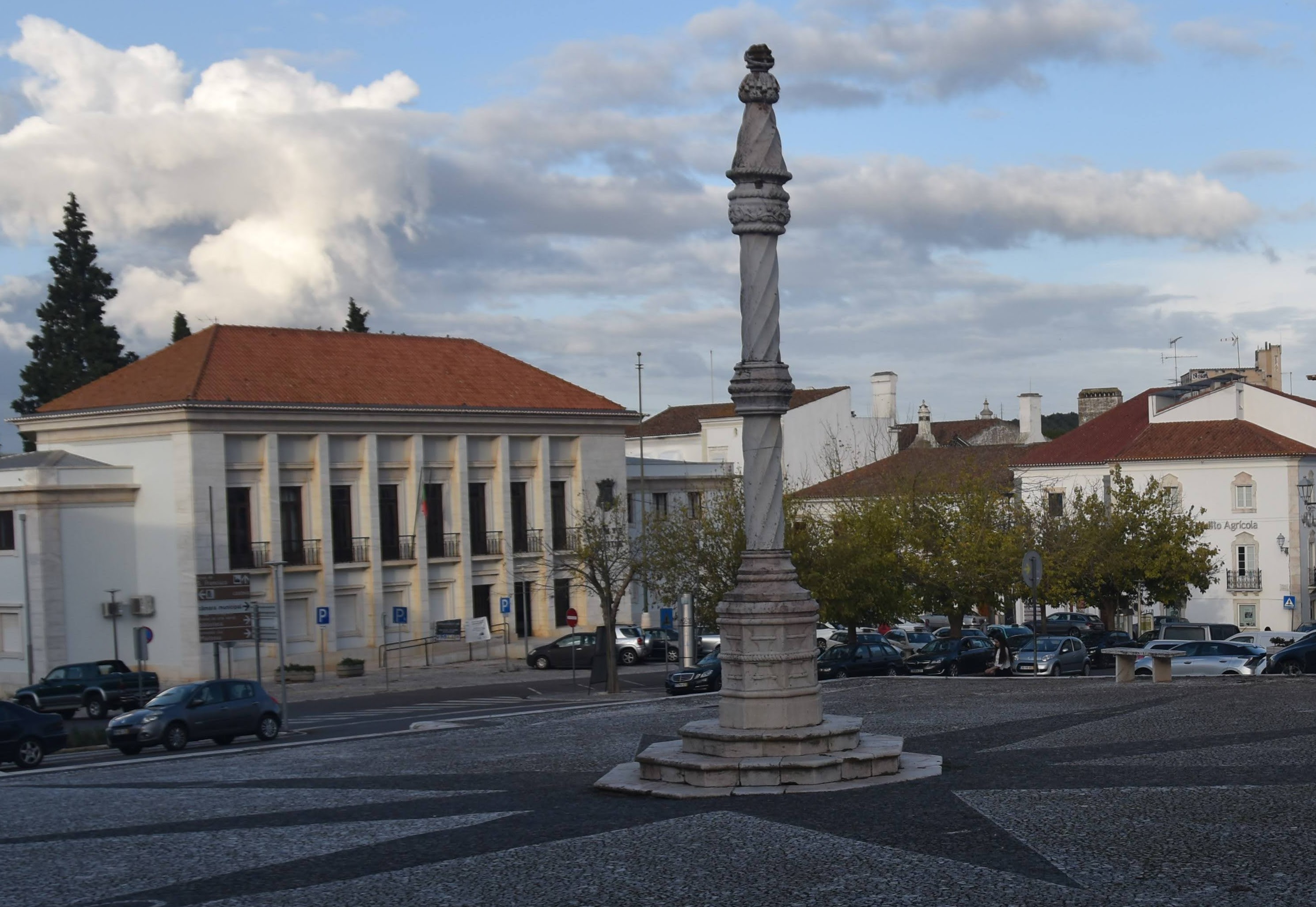
Pelourinho de Estremoz.
Now, the day up until now has been pretty enchanting — great views, lots of history, good wine, empty-ish cobblestone streets. But this dinner. O.M.G. The restaurant at Casa do Gadanha is one of many Michelin-starred restaurants we sampled on our trip but even in such company, it was outstanding. We took the 8 course menu with wine pairings.
The restaurant is tiny and we were right next to the kitchen so we ended up chatting a lot with chef Rúben Trindade, whose wife also has a restaurant in Estremoz (possibly Mercearia Gadanha, also of Michelin fame). The place has a reputation for its breads and pizzas done in a wood-fired oven, which show up in the tasting menu. The ingredients are fresh and local-ish. Everything was unlike anything I had ever tasted, but nothing was trying too hard — it all just fit together simply and beautifully. I think my favorite was an eggplant dish, and I'm pretty sure we also had one of the shrimp dishes I see pictured online.

Not all of the wines from Quina do Mouro have up-side-down labels, but the Erro B was the result of some successful experimentation.
In the morning, we came downstairs for the included breakfast, and here was Rúben again, back at work. I was happy to greet him and reiterate how much we had enjoyed the dinner, but I also felt a little bad, because he had told us he has young children. Such is the life of the chef, I suppose. And of course the breakfast was delicious.
Before we packed up, I walked back up to a little gift shop I had spotted on our previous trek to the castle. It was small and seemed much less commercial than the touristy shops in other touristy areas we had been thus far. I found lots of local items and bought some gifts for friends and family, like small bowls carved from olive wood. There were also many ceramic items that I coveted, but was unsure I could get them home in one piece (I am sure they would have shipped them for me, but I expect it would be quite expensive).
In shops and restaurants in Portugal, I noticed signs for the Complaints Book. I also saw it referenced in Reddit conversations about Portugal, so I looked it up. It is a consumer protection tool required for all businesses, in physical and/or electronic form. You can ask for it if you have a case that is not being resolved — be sure to look up the requirements if you feel you must go this route. I am not really advocating to threaten or use the book, I just thought it was interesting how consumer protection figures into the national laws and culture (unlike *some other* places I can think of). Apparently there is also a Compliments Book as well.
We left Estremoz and said goodbye to Portugal as we prepared to cross into Spain for our next destination, Seville.